CLASSICALLYPRACTICAL.COM

Ruminating on Remedies

Picture

Julia Coyte, CHom

My thoughts on a few of the many thousands
of homeopathic remedies available.
​Where, when and how they may be applied in everyday life.

#wellnessawaits

To subscribe to Ruminating on Remedies via Substack, click here. Thanks!
Note: My Substack subscription is free of charge.


Or, follow me on any of the following social media sites…

X/Twitter: @RemedyRuminator
Telegram:
 t.me/wellnessawaits
Facebook: @JuliaCoyteHomeopath
MeWe: mewe.com/i/juliacoyte
Gab: @Bobthepeacock​
Gett'r: Classically Practical Homeopathy @ jcoyte
Locals: https://rollinwithmyhomeys.locals.com
I use Substack to email my latest articles. To subscribe for free, click above or go to homeopathy.substack.com.

Picture
​Ruminating on Remedies: Digging Deeper 

​ Introducing in-depth homeopathic articles,
digging a little deeper into topics that take my fancy.
​
At this point in time, it is only available at homeopathy.substack.com but
I hope to have it available here in the near future!

Ruminating on Remedies is and always will be free.
Those articles are listed below.
​
Thanks for reading!!
  • Home
  • In a nutshell …
    • Classical? Practical?
  • About
    • contact >
      • FAQ
  • Blog
  • Book appt
    • Before first appt >
      • Choosing a homeopath
      • Useful info >
        • References & Resources
  • Research
  • Product

8/22/2026

Quickie Pain Relief: OHM sells a little kit

Read Now
 
Picture
OHM is an excellent homeopathic pharmacy located in Texas. They make a nice little kit aimed at pain management. Unfortunately, OHM doesn’t sell to the general public; but, that doesn’t stop you from creating your own little kit based on their suggested remedies.

Let’s see why these 12 11 remedies are included in this select little kit and why you may want to consider having some handy.
Note: this is a quick list to get you started — it is far from complete.


Aconite 200c
  • Pains that come on suddenly and intensely; may follow shock.
  • Sharp, shooting, stabbing pains; may be quite severe.
  • Nerve/neuralgic pains, especially when they are accompanied by anxiety or restlessness.
  • Burning pains, particularly in the face or extremities.
  • Throbbing pains; headaches.
  • Pains are worse from the cold and may improve with warmth.
  • Sore throats, sudden colds and coughs.
  • Mentally/Emotionally: marked restlessness and anxiety; with a fear of death or disaster.
  • Particularly good when used as soon as possible when the symptoms arise.

Arnica 30 & 200
  • Bruised and sore pain, especially after physical trauma or injury. Soft tissue injury.
  • Muscle and joint pains and stiffness from overexertion or strain.
  • Helpful following surgical or dental procedures.
  • Headaches that feel bruised or sore; following head injury/concussion.
  • Aggravation from touch or pressure.
  • Restless and unable to find a comfortable position.
  • Useful where the body or mind is in a state of shock due to a recent injury or traumatic event.

Bryonia 30c
  • Sharp, stabbing pains — may be quite intense and are often localized.
  • Worse with any movement or jarring; complete stillness is preferred.
  • Joint pain, especially when movement makes it worse.
  • Headaches that feel heavy and are worse from movement; may be described as “bursting.”
  • Chest pain which is worse from deep breathing or coughing.
  • Abdominal pain: sharp and worsens with movement. Constipation.
  • May feel restless but only find relief when completely still.
  • Dryness: dry, sore cough; dry mucous membranes.
  • Irritability and thirst.
  • Acute inflammatory conditions affecting the joints, lungs and abdomen.

Calc phos 6c
  • Growing pains, especially during periods of rapid growth.
  • Bone pains or soreness, particularly in cases of fractures or delayed healing.
  • Neck and back pain; may be associated with weakness or poor posture.
  • Joint pain may be worse in cold, damp weather and improve with warmth.
  • Headaches resulting from mental exertion or stress — a dull ache.
  • Abdominal discomfort or colic, especially in children

Calendula 30c
  • Pain associated with cuts, scrapes and other wounds; abscesses or infected wounds.
  • Burns or burning pains (including sunburns); burning sensations.
  • Sore and tender skin: dermatitis, rashes, cuts, abrasions.
  • Helpful to alleviate pain and promote healing after surgical procedures, especially in soft tissue.
  • Joint pains which are worse movement and better with rest; sprained joints or muscles.
  • Sensitive to touch or pressure.

Chamomila 30c
  • Particularly effective for teething pains, characterized by irritability and discomfort.
  • Colicky abdominal pain, often accompanied by cramping and restlessness.
  • Intense headaches with irritability or anger. (See also, Caffeine Withdrawal.)
  • Neuralgic/nerve-y pains that are sharp and shooting.
  • Sore or tense muscles, especially after exertion.
  • Mental/Emotional: often indicated when pain is exacerbated by emotions like anger or frustration. Sensitive to pain, feeling overwhelmed by even mild discomfort. May seek comfort from being held or cuddled, particularly in cases of teething or colic. Oversensitive to pain.
  • Worse at night or during emotional distress. Better from warmth and warm applications.

Hypericum 30c
  • Nerve pain: sharp, shooting, tingling or burning sensations. Nerve trauma.
    • Nerve-related pain following surgical procedures.
  • Pain resulting from injuries to nerve-rich areas (fingers, toes, spine).
  • Cuts or lacerations involving nerve endings.
  • Headache with a neuralgic component.
  • Shooting pains; may radiate from one area to another.
  • Sensitivity to touch.
  • Worse from movement.
  • Mental/Emotional: emotional distress related to injuries or trauma.

Phosphorus 30c
  • Burning pains, especially in the chest, stomach or extremities.
  • Neuralgic/nerve pains: sharp and shooting, often with heightened sensitivity.
  • Headaches: intense and throbbing; often described as bursting.
  • Joint pains worse in the cold weather; improves with warmth.
  • Crampy or colicky abdominal pain with digestive issues.
  • Pain associated with bronchitis or pneumonia.
  • Vascular trauma.
  • Post-anesthesia effects.
  • Often very sensitive to external stimuli, including touch, noise and light.
  • Worse at night and during times of emotional stress.
  • Thirsty for cold drinks which may temporarily relieve the burning sensations.
  • There may be an emotional aspect to the pain: anxiety or fear accompanying physical symptoms.

Rhus tox 30c
  • Stiffness and soreness in muscles and joints; worse after periods of rest. Muscle or tendon sprains.
  • Rheumatic (deep aching or throbbing) pains, worse in cold, damp weather and better with movement and warmth.
  • Burning sensations.
  • Pains following overexertion or strain.
  • Restlessness due to discomfort — feel they need to move to relieve the pain.
  • Skin sensitivity or rashes; eczema.
  • Worse at night or at rest.

Ruta 30c
  • Bruised, sore and aching pains, especially after trauma or injury.
    • Injuries to bones and periosteum; sprains and dislocations.
  • Useful for tendons and ligaments — often described as stiffness or strained; following injuries.
  • Back pains which are worse from lying down or sitting but improves with movement.
  • Eye strain — may lead to aching eyes and headaches.
  • Deep pains in the bones; following injury or over-doing it.
  • Sensations: strained and bruised, particularly in joints and tendons.
  • Worse from cold and damp; better from warmth and rest.
  • Good for mechanical injuries; overuse of muscles and tendons.

Symphytum 30c
  • Deep, aching bone pains, particularly after fracture or injury. Injuries to bones, cartilage and periosteum.
    • NOTE: do not use Symphytum with suspected fracture until after imaging and the bone is properly set.
  • Pain from injuries to bones and soft tissues. Joint pains often better with movement.
  • Bruised or sore sensations.
  • Pain following surgical procedures involving bones or joints.
  • Nerve pain occurring in conjunction with bone injuries.
  • Sensitive to touch — even the slightest touch can cause discomfort.
This kit suggests using the appropriate remedy every 15 minutes in acute situations. Reduce frequency repetition upon improvement.
​
I have a number of longer homeopathic pain remedy articles still in the works. Sit tight!


Julia Coyte, CHom
Classically Practical homeopath

#wellnessawaits


Share

12/6/2025

Painkillers?

Read Now
 
Picture
A couple of months ago, we were given some “new” information about Tylenol. In actuality, there was nothing new about this information, it was just brought to our broader attention through "official" channels. (See, also: The Road Less Traveled, from 2022 where I brought a little light to the darker sides of over the counter (OTC) painkillers for headaches*.)

“But, popping a painkiller is so easy!”
I know. I truly do. There is a song called “The Sinking Feeling” by the band The The, which says, “The path of least resistance leads to the garbage heap of despair (air-air-aiiir), I think I’d better get back in bed.” I like the whole song, but that one line is what really sticks with me. Taking the easy route is not always the best choice.

I am confident in saying that when it comes to dealing with your pain, taking the road less traveled is well worth the time and energy required to figure it out. Using OTC painkillers don’t just block the pain, they block important healing messages to get the job done, doing what the body is meant to do -- fixing what's wrong.

​“In all the cases, the immense advantage of homeopathy is that it cures in a gentle, quick and lasting manner, according to Hahnemann’s postulates. In this sense, there is no other therapeutic capable of being compared to it. Besides, it is never harmful, it is never dangerous, it never produces side effects because it lacks all chemical substance; thus, it is the best therapeutic ever invented by human beings.”
—Francisco Xavier Eizayaga, M.D.
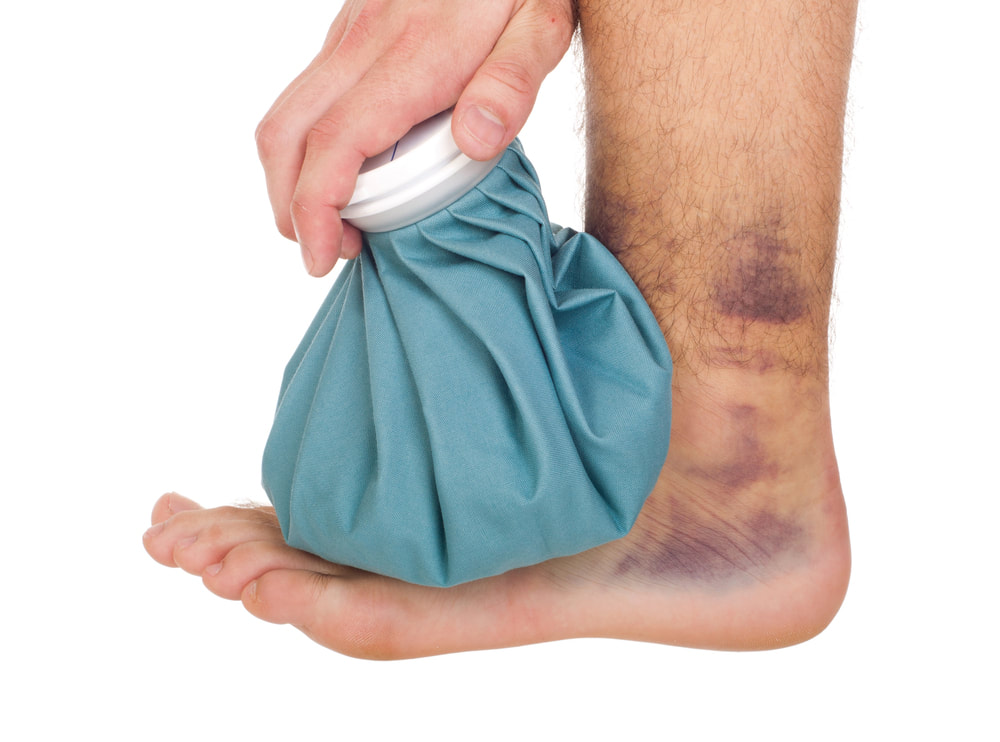
For the sake of discussion, let’s assume we are dealing with a sprained ankle.

​What exactly is a sprained ankle?
A sprain is a trauma to the ligaments by stretching it too far; this causes pain and difficulty with movement. “A mild sprain is really a pulled or strained ligament, with tenderness and mild swelling, but no tearing of tissue. A moderate strain** has partial tearing of the ligament, while a severe strain entails a complete tear, with corresponding degrees of swelling, bruising and inability to move the joint or bear weight” (Hershoff 2000). Conventional treatment involves applying ice to the area and wraps to compress the area. Taber’s also recommends “analgesics and NSAIDs.” As we’ll see below, not all sprains respond well to ice and wraps — another place where homeopathy shines -- We can use those data points to help us find the best suited remedy.

Let’s get back to the simplicity of the over-the-counter pills… How do they work? If you ask an AI, it will tell you that the exact mechanism of acetaminophen (e.g., Tylenol) is not fully understood, but it is believed to work through the central nervous system to block pain signals. Ibuprofen (NSAIDS/Advil), on the other hand, blocks the production of prostaglandins.

What are prostaglandins again?
In simple terms, prostaglandins (PGs) are the chemical messengers that cause pain, swelling, and fever — let’s call that the “alarm system”. In short, Advil turns off the alarm system at the source (blocks the PGs). Tylenol turns the volume down on the alarm sounds in your brain — the alarm is still going, you just don’t “hear” it as loudly, so the pain feels less intense.

Sounds like a solid plan to me! What could be the problem with it?
Taber’s Medical Dictionary (Venes 2017) tells us that prostaglandins (PGs) “influence a broad range of biological effects, including vasodilation, vascular permeability, bronchoconstriction†, platelet aggregation, dysmenorrhea†, inhibition of gastric acid secretion, stimulation of neural receptors for pain during tissue damage, sleep inhibition†, and maintenance of patent ductus arteriosis†.” That sums it all up, doesn’t it?! Keep reading — we’ll see if we can sort some of this out.
  • Vasodilation. If you sprain your ankle, vasodilation is what causes the ankle to swell up and become red, hot and painful. Blocking the vasodilation reduces swelling and makes the ankle less painful. The potential harm of blocking that vasodilation is the vasodilation is actually allowing for your body to call in the repair crew to come in and fix what needs fixing. The OTCs can slow down the healing process — the correct messages aren’t being sent to the fix-it crew.
  • Vascular permeability. This is what causes the swelling (edema), another healing mechanism. As I understand the process, the swelling creates a nice liquid-y environment that allows the healing cells (neutrophils and macrophages) to move around quickly to get their jobs done. Think of it like a walled off watery construction site. If this mechanism is turned off, we risk messing with the essential building blocks (such as fibrinogen and fibronectin), making our imaginary construction site walls temporary, rather than permanent.
  • Platelet aggregation. Kind of important stuff. Let’s assume that when you sprained your ankle, you also got a cut at the same time. Without platelet aggregation, bleeding would continue. Platelets job is to stop the bleeding. Ibuprofen keeps the platelets from doing their thing and is therefore considered a “blood thinner” — but it’s not actually thinning the blood, it’s slowing down the blood clotting mechanism.
    • This would be part of the reason Advil/Motrin has been known to cause gastrointestinal bleeding (especially with prolonged use or for those with a history of peptic ulcers or other bleeding disorders or who take blood thinning medication. If you require an OTC painkiller with any of these conditions, acetiminophen would be a better choice in this instance as it is “a weak inhibitor of platelet cyclooxygenase 1” (Munsterhjelm et al. 2005).
    • “NSAIDs induce clinically significant ulceration, bleeding, and/or obstruction in 1-4% of patients chronically taking these drugs. Even higher rates of ulceration are seen in patients with a history of peptic ulceration; in patients concurrently taking anticoagulants, low-dose aspirin, or glucocorticoids; and in the elderly” (Wallace 2008).
      • 1-4% doesn’t sound like a big deal, but there was a mom on the playground once upon a time who was “bleeding out” due to NSAID use (I was told later). Another mom, who happened to be a doctor, was nearby. If not for her, she probably wouldn’t have made it. This was my first wake up call to an OTC drug I used to use regularly. NSAIDs have also caused GI bleeding in family members - so two close encounters with this stated tiny minority.
    • Inhibition of gastric acid secretion. On the topic of the GI system, NSAIDs can increase gastric acid secretion and harm the stomach lining, too (Wallace 2008). So, the prostaglandins inhibit the gastric acid secretion and the NSAIDs can increase the acid secretion. Tylenol does not have this effect.
  • Stimulation of neural receptors for pain during tissue damage. This is called nociception which is, according to Taber’s (Venes 2017): “The stimulus-response process involving the stimulation of peripheral pain-carrying nerve fibers and the transmission of impulses along peripheral nerves to the central nervous system, where the stimulus is perceived as pain.” By blocking these signals, you are blocking your body’s way of telling you to stop using an injured part so it can heal, potentially causing more damage before you have healed. Tylenol, on the other hand, could be even more harmful as it has not done anything to lessen the inflammation at the injury site, it has just turned down the pain volume.

OK. I get it, OTCs are not completely without risk. What do you suggest using for this fictitious sprained ankle?

Well, homeopathy, of course!
  • Arnica is always a good place to start for any injury. Swelling, bruising, weakness; worse with movement, touch and jarring. Better for cold compresses.
  • For a sprained ankled with redness that feels hot, painful, swollen and stiff and is worse when moving it (or, even incapable of moving it) but feels better from pressure (even tight bandaging) and local heat: Bryonia alba.
  • Rhus tox for pain and stiffness that is worse with the starting of movement but it gets better with continued movement and feels better from applied heat. In other words, the stiffness and soreness are worse from staying in one position too long. Rhus works on ligaments and connective tissue as well as joints.
  • If the affected area feels cold to the touch but also feels better from cold applications/worse for warmth: Ledum palustre. There may be a deep aching.
  • Ruta if it feels tender or bruised and aching — especially good for sprains involving ligaments, tendons and connective tissues. Also good for repetitive strain injuries. May feel worse with cold, damp weather or pressure on the affected area; may feel better for warmth and rubbing.
  • Symphytum is known to aid in healing ligaments and tendons, making it particularly useful in sprains where joint stability is compromised. Particularly good if there is a deep, aching sensation with significant bruising around the sprained area.
  • Bellis perennis for sprains with more bruising and may feel cold (Bellis is sometimes called “the deeper Arnica) — deep-seated soreness; may feel better for warmth and gentle movement. There may be a feeling of constriction as if there were a band around the joint.
Another option… choose two well suited remedies and alternate them. There are a lot of different pieces to a sprain puzzle and these symptoms may change as the healing takes place — move to the next remedy as symptoms change or if the current remedy is no longer as effective.

Or, the combination of Arnica, Ruta and Rhus is an excellent injury go-to, covering many bases at once.

I encourage you to read up on the OTC painkillers. Drugs.com is a good place to start. (Hint: keep scrolling down the page on Drugs.com. There is a brief overview at the top of the page, but if you keep going, you’ll find further links for “side effects” that should be known but are a little hidden.)

If you purchase/make a good household kit, you will be ready to deal with most common ailments that come your way and be able to skirt the OTCs.

Julia Coyte, CHom
Classically Practical homeopath

#wellnessawaits

*Ibuprofen/Advil/Motrin/NSAIDS are used interchangeably throughout this article; likewise acetaminophen/Tylenol, too.

**Some sources say a strain is the injury to tendons while sprains are injuries to ligaments. Other sources use strain and sprain interchangeably.
​
†In keeping with the sprained ankle analogy, bronchoconstriction, dysmenorrhea, sleep inhibition and maintenance of patent ductus arteriosis do not pertain to this situation.

Reference list
American Association of Homeopathic Pharmacists, n.d. FAQs [online]. The American Association of Homeopathic Pharmacists.

Anderson, L. A., 2024. Pain / Fever Drugs and Alcohol Interactions [online]. Drugs.com.

Andonian, N., 2020. Rebound (Medication-Overuse) Headaches: How to Stop Them [online]. GoodRx.

Dimitropoulos, E., 2014. Acetaminophen Toxicity: What Pharmacists Need to Know [online]. Uspharmacist.com.

Durbin, K., 2023a. Acetaminophen [online]. Drugs.com.

Durbin, K., 2023b. Ibuprofen [online]. Drugs.com.

Fine, M., 2013. Quantifying the Impact of NSAID-Associated Adverse Events [online]. AJMC.

Harvard Health Publishing, 2024. Acetaminophen safety: Be cautious but not afraid - Harvard Health [online]. Harvard Health.

Hershoff, A., 2000. Homeopathic Remedies. Kindle. Avery Uuuu-Uuuu.

Mcconnell, T. H., Paulson, V. A. and Valasek, M. A., 2014. The nature of disease : pathology for the health professions. Philadelphia: Wolters Kluwer Health/Lippincott Williams & Wilkins.

Ogilvie, J. D., Rieder, M. J. and Lim, R., 2012. Acetaminophen overdose in children. Canadian Medical Association Journal [online], 184 (13), 1492–1496.

Saljoughian, M., 2016. Acetaminophen Intoxication: A Critical-Care Emergency [online]. Uspharmacist.com.

Venes, D., 2017. Taber’s cyclopedic medical dictionary. Kindle. Philadelphia: F.A. Davis Company.

Waugh, A. and Grant, A., 2023. Ross and Wilson Anatomy and Physiology in Health and Illness. 14th ed. Edinburgh: Elsevier Health Sciences.

Share

10/28/2023

The Bee's Knees

Read Now
 
Picture
Is it just me or is everybody noticing the incredible number of new knees being handed out? I know 89 year olds getting new knees and I know people in their early 50s getting new knees. New knees are everywhere!
​
Don’t get me wrong — a new knee is an amazing feat. I know people with one new knee and I know people with two new knees. Everybody is pretty darned happy with their new knees, no matter how many they have received! They are not quite like what was portrayed in The Six Million Dollar Man and The Bionic Woman, but I’m told from those who have had the procedure that it is life changing stuff.

I recently suggested a homeopathic combination remedy for somebody who is waiting for their new knee. She has about 2-1/2 months to wait for her surgery and she is in some significant pain. She’s pretty skeptical of homeopathy and, to be honest, I wasn’t sure she was going to try the remedy. 

She agreed to try it. I suggested taking it twice a day. I also mentioned that sometimes some sort of relief can be felt pretty darned quickly. I guarantee she had zero expectations of receiving any sort of benefit. She took her first dose of the remedy and she headed home. Shortly thereafter, I texted her because I forgot to tell her how to get the remedies out of the self-dispensing tube*. 

Well, she responded that her stiffness had gone down substantially and that she was actually freaking out a little bit. I wasn’t surprised, but she was! (This was less than an hour after putting the remedy in her mouth.)

What did I give her? I gave her a combination of Hypericum, Rhus tox and Symphytum.

If you are on track for a new knee, I’m not suggesting this combination remedy will halt that process, but I am suggesting your discomfort may be lessened while you wait. And, who knows, if you start homeopathy early enough in the process, perhaps a new knee can be avoided, or, at the very least, postponed.

Homeopathy is indeed the bee’s knees, as far as I’m concerned!


Julia Coyte, CHom
Classically Practical homeopath


#wellnessawaits

* These tubes can be very frustrating. The first time I tried it, I actually ended up using something sharp to widen "the stupid little hole” while I was cursing the entire experience. I guess I was in too much pain to read the instructions on the tube. 

To save you the annoyance, here is the trick:

With the lid on the tube, turn the tube upside down and twist the lid. The pellets will fall into the lid. When the desired number of pellets have dropped, remove the lid and pour the pellets directly into your mouth from the lid. Voila!

Remember, the homeopathic medicine is applied on the outside of the pellet, therefore it is best not to handle them -- the remedy acts best when it is allowed to dissolve directly into the mucosal lining under the tongue. 

From Boiron: "Can I touch homeopathic pellets or tablets with my fingers or hands? We do not recommend touching the pellets and tablets with your fingers or hands. Introducing any moisture to the pellets or tablets will begin the dispensing of the medicine, and any oils on your skin may coat them and hinder absorption once the medicine is in your mouth."

Share

7/23/2022

Summer Fun #4: Sprains, Strains & Bicycle Falls

Read Now
 
Picture
I didn't get to all of these injuries, but I address quite a few of them in this article.
Picture
Summer athletes, take heed! ER visits shoot up in the warmer months as the weekend warriors take on the bats, balls and trails.

SPRAINS
This one hits home right now as my husband is in week 3 of his nasty sprain. Click here for an 18-second visual of what’s involved in an ankle sprain. (For the record, he wasn’t being a weekend warrior, it was just unfortunate happenstance.)

We were hours from medical care, his ankle was huge and looked very wrong. I gave him Arnica 1m immediately, to great effect. Ice. Rest. Elevation. More Arnica as needed. The ER took X-rays and sent him on his way with 2 Ace bandages and told him to take ibuprofen* for the pain. That was helpful. Not. The next day we were able to see a proper orthopedist who took more X-rays and this time sent him on his way with a walking/air boot and the same instructions for pain. He never resorted to the over-the-counter painkillers, I am happy to say.

What to do after that? Well, some people say the X-rays can be a problem. If you’re worried about that, Nat Mur 6x, (twice daily the day of the X-ray and a few days following) is said to help.

Back to sprained ankles…

The number one remedy to turn to for any accident or injury is Arnica. Give it early and repeat as needed. As a general rule of thumb, the worse the injury, the higher the potency and then back off the repetition and lower the potency as the pain dictates.

The next remedy to consider is Aconite to help reduce the shock which often follows a bad injury. Remember! Aconite rhymes with fright. Any situation that has been a shock to your system can benefit from Aconite. And, in this case, it can benefit not only the person who had the accident, but the person who witnessed the accident.

The traditional, much accepted treatment for injuries is RICE: Rest, Ice, Compression and Elevation. Some injuries respond to cold, some respond to heat. Ice restricts blood flow and blood flow is what you need to heal your parts. But, that blood flow is also what can cause all the swelling. I am not a physician but I have certainly had more than my fair share of injuries in my lifetime. Some of my injuries felt better with rest and elevation and ice and some felt better getting moving right away. To my mind, your pain (in addition to the input from your physician) needs to be your guide as to what is right for you.

What else can help? Here are a few homeopathic suggestions and their symptoms which may help you choose the best homeopathic remedy for your injury.

Arnica: Start here. “It is safe to say that 98% of patients who have suffered traumatic injury, however caused, need a dose of Arnica to begin their recovery” (Thomas 2000). See below for some research on Arnica.

A typical Arnica patient does not want anyone to touch their injured area. Sore, they may feel “beaten up” with swelling, bruising and inflammation. Topical Arnica is an option if the skin is intact. Do NOT apply Arnica to open wounds.

Rhus tox: for an injury that feels better for heat and continued motion. Worse on first moving. Better suited to simple sprains.

Ruta: for an injury that is worse for motion and worse for cold application. Bruised, crushed, weak feeling. A remedy for tendons and ligaments, similar to Rhus in its pain. May feel hot to touch. Follows Arnica well to help aid in recovery.

Bellis perennis: Think of this remedy if Arnica is not helping as much as you think it should be helping. Bruised pain. Like Rhus tox, a Bellis pain hurts when starting to move but gets better as you keep moving the injured area and is better from heat. A Bellis pain, though, may have the sensation of a band squeezing the injured joint. “Complicated sprains involving tendons, ligaments and soft tissue with swelling, edema and pain” (Ratera 2016).

Bryonia: worse for the slightest movement of any kind. Better for rest and immobility. This person might be a little grumpy as a result of their injury.

Ledum: when the injured area feels better from cold applications. Ankle feels dislocated and is worse by walking, to the point of being intolerable. The skin may be cold to the touch.

Symphytum for tears at the point of tendon insertion into the bone (Ratera 2016). This remedy has been known to speed along recovery. CAUTION: do NOT use Symphytum until you are certain there is no break or fracture.

Cell Salts which may be of help for sprains (Weintraub 1999):
  • Ferr phos: first aid remedy
  • Mag phos: pain which accompanies sprains
  • Nat sulph: after effects of shock
  • Ferr phos, Kali mur: swelling
for tendons and ligaments: Make a compress from these cell salts dissolved in tepid water and applied to the area: Calc fluor, Ferr phos, Mag phos, Kali mur.

Again, let your pain be your guide as to how long and how often you taking the remedies


Picture
STRAINS
According to American Academy of Orthopedic Surgeons, a sprain is a stretch and/or tear of a ligament and a strain is an injury to a muscle or tendon. Sprains generally occur in ankles, knees and wrists and strains generally occur in the back or leg, particularly the hamstring. Both injuries can range in severity and neither is necessarily worse than the other — it depends on the person and the injury.
​
Conventional medicine again recommends RICE for strains (see above).

Homeopathically, Arnica is the best place to start and may be all that you need. “Forcing, twisting, wrenching strains and tears are most likely to respond to Arnica if it is prescribed within 24 hours of the trauma” (Thomas 2000).

The above list of sprain remedies can also be applied to muscle strains with these notations:

Rhus tox may be especially helpful in injuries due to lifting or over-exertion.

Bryonia is especially well suited to intercostal and rib injuries.
​
Ruta is also useful for injuries due to over-exertion. Follows Arnica well to help aid in recovery.

Traumeel or T-Relief as it is now known is a nice combination remedy to help with strains. (See below for some Traumeel research.)

Cell Salts which may be of help for strains (Weintraub 1999): 
In addition to the above listed cell salts:
  • Calc sulph, Mag phos: for muscles strained from overwork and a sensation of heat
  • Mag phos: for muscle spasms


Picture
BICYCLE FALLS
Number one: wear a helmet. Høye (2018) found helmet use reduced serious head injury by 60%.

We just watched an interesting documentary called Bikes of Wrath where 5 young guys re-created the journey from Steinbeck’s novel of a similar name, but this time on bikes. None of them had any head injuries, but they did indeed have some strains and perhaps a sprain — in his case, it was his elbow. They certainly could have benefitted from carrying a little remedy kit with them, that's for sure!

Sprains and strains are covered above, let's move on to cuts, scrapes and contusions.

Once again, Arnica is the first stop for any injury. If the fall was big enough, take a dose of Aconite for any shock.


Picture
ROAD RASH, see this link for more information 

Ooof! It’s been a long time since I’ve had to pick gravel out of my knee, but I can still remember how unpleasant that is!

In this case, an oral dose of Arnica may be helpful because there is probably some element of bruising that will accompany the road rash, but remember DO NOT to apply Arnica to broken skin.

I have no idea who this group is, but they have some clear images indicating whether hospital treatment should be sought following a skinned knee.

Assuming the wound is not too bad and does not need professional medical care, clean the area and remove any debris. The Wound Care Society has some nice instructions.

Calendula is where you want to start homeopathically for this injury — after the wound has been sufficiently cleaned out, that is. Calendula can be taken orally, or a Calendula tincture or cream can be applied. If you have the homeopathic pellet, but not a tincture, dissolve the Calendula pellet in some clean water and apply that to the wound. Hypericum can be used in this way, as well.

Ledum is useful if the wound is deeper. It may be cool to the touch and very painful.

Hypericum: like Calendula, Hypericum is very good and soothing to use topically. In fact, they can work very well together. Helios offers a lovely combination cream**. A Hypericum wound is very sensitive and is definitely indicated if any nerves are involved, like fingertips or toes.

Hamamelis is very good if the wound continues to bleed. Arnica, too, can help with bleeding, but Hamamelis would be the next stop. Also very good for hematomas which may form as a result of the injury.

Cell Salts which may be of help for cuts and abrasions (Weintraub 1999): 
  • Ferr phos for abrasions and wounds; topical application of powdered tables applied directly to the injured parts
  • Calc sulph: for cuts that are slow to heal
  • Kali mur, Ferr phos: for swelling


Picture
Bruising
​

Guess what the first remedy is for bruising? You’re so clever! Yes, it’s Arnica! The bruise is painful and they don’t want anybody to touch it!

Bellis perennis if the bruising is deeper, and especially if the bruising is in the abdominal area.

Ledum shows up again here, too -- if the area feels better with cold application.

Ruta or Symphytum if the bone is bruised or the periosteum is affected (the tissues between the bones and the skin — think of the shins or cheekbones).

Cell Salts which may be of help for bruising (Weintraub 1999): 
  • Ferr phos for any bleeding into tissues -- may also apply powder directly to the area
  • Calc fluor for bruises affecting the bones
  • Kali phos for all-over feelign of being bruised
  • Kali mur for hard, blue-black bruises
​
To make a compress: dissolve 5 of each cell salt tablet and apply locally; take internally also: Ferr phos, Kali mur.


Picture
HEAD INJURIES
First off — consult a physician if you have hit your head, whether you were wearing a helmet, or not.

Once again, Arnica is the place to start. Not only because it’s the go-to first remedy for any accident or injury, but in this case because Arnica is the first choice homeopathic remedy for head injury, period.

Bonus! One of my favorite homeopathic books for injuries, First Aid with Homeopathy by Dr. Manuel Mateu Ratera, has a PDF of his Head Injury pages available online.

The next-in-line remedy for head injuries is Nat sulph (see cell salts below). Like Arnica, Nat sulph can be used for residual effects from old head injuries.

Why choose one over the other? Arnica has the general trauma/injury element to it.

When to choose Nat sulph? Nat sulph has a slight edge in terms of residual effects from head injuries: concussions afterward, migraines afterward. However, Nat sulph is more clearly indicated when there is vertigo following a head injury or depression or mental dullness sets in after a head injury.

For some research on mild traumatic brain injuries and homeopathy, see Chapman et al. (1999). 

Cell Salts which may be of help for head injuries (Weintraub 1999): 
Calc fluor for bruises on the cranial bones, with hard, rough, uneven lumps
Ferr phos for bruising to the head, with pain
≈ Nat sulph as a cell salt may be used, as well.


These homeopathic remedies, Arnica in particular, should accompany you when you set out for any physical activities this summer. Or, better yet, purchase a little kit to throw in your bag. Taproots has nice one*.

Julia Coyte, CHom
Classically Practical homeopath

#wellnessawaits
* Just because NSAIDs are available over the counter does not mean they are without risks. There are plenty of studies out there talking about the downside of taking NSAIDs. Below are just a few of these studies.

** I have no affiliation with these companies, I just like their products.

Reference list

American Academy of Orthopedic Surgeons, n.d. Sprains, Strains and Other Soft-Tissue Injuries - OrthoInfo - AAOS [online]. www.orthoinfo.org. 

Helios Homoeopathy, n.d. Hypericum/Calendula cream: 
helios-frontend [online]. www.helios.co.uk. 

Høye, A., 2018. 
Bicycle helmets – To wear or not to wear? A meta-analyses of the effects of bicycle helmets on injuries. Accident Analysis & Prevention [online], 117, 85–97. 

Mayo Clinic, 2018. 
Sprained ankle - Symptoms and causes [online]. Mayo Clinic. 

Ratera, Dr. M. M., 2016. 
First Aid with Homeopathy. Kander, Germany: Narayana Verlag.

Sonnenschmidt, R., Sankaran, R., Vithoulkas, G., Borland, D., Scholten, J., Kusse, F., Mangialavori, M., Birch, K., Das Kaviraj, V., Perko, S., Welte, U., Le Roux, P., Hahnemann, S., Jus, S. and Chauhan, D., n.d. 
Manuel Mateu i Ratera First Aid with Homeopathy Reading excerpt First Aid with Homeopathy of Manuel Mateu i Ratera Publisher: Hahnemann Institut [online]. 

Summers, S., 2022. 
How can I take care of a scraped knee? [online]. www.truthaboutnursing.org. 

TapRoots, 2022. 
SUMMER On-the-Go Portable Homeopathic Kit Including Hard-covered Case, Holds 8 Kit-sized Remedies [online]. TapRoots. 

Temple ReadyCare, 2021. 
6 Reasons for Summer ER Visits and How to Avoid Common Injuries and Illness [online]. Temple Health.

Thomas, E., 2000. 
Homoeopathy for sports, exercise, and dance. Beaconsfield, Bucks, Uk: Beaconsfield Publishers.

Weintraub, S., 1999. Natural healing with cell salts. Pleasant Grove, Ut: Woodland Pub.

woundcaresociety, 2016. How to heal skinned knee quickly? [online]. Wound Care Society. 

woundcaresociety, 2019. 
How Long Does Road Rash Take To Heal [online]. Wound Care Society. 


Research links - Arnica:
Marzotto, M., Arruda-Silva, F. and Bellavite, P., 2020. Fibronectin Gene Up-regulation by Arnica montana in Human Macrophages: Validation by Real-Time Polymerase Chain Reaction Assay. Homeopathy [online], 109 (03), 140–145.

Research links Homeopathy & Head Injury:
Chapman, E. H., Weintraub, R. J., Milburn, M. A., Pirozzi, T. O. and Woo, E., 1999. Homeopathic Treatment of Mild Traumatic Brain Injury: A Randomized, Double-Blind, Placebo-Controlled Clinical Trial. Journal of Head Trauma Rehabilitation [online], 14 (6), 521–542. 

Research links: Traumeel:
Birnesser, H., Oberbaum, M., Klein, P. and Weiser, M., 2004. THE HOMEOPATHIC PREPARATION TRAUMEEL® S COMPARED WITH NSAIDS FOR SYMPTOMATIC TREATMENT OF EPICONDYLITIS. Journal of Musculoskeletal Research [online], 08 (02n03), 119–128. 

Conforti, A., Bertani, S., Metelmann, H., Chirumbolo, S., Lussignoli, S. and Bellavite, P., 1997. 
Experimental studies of the anti-inflammatory activity of a homeopathic preparation. [online]. 

Lussignoli, S., Bertani, S., Metelmann, H., Bellavite, P. and Conforti, A., 1999. 
Effect of Traumeel S, a homeopathic formulation, on blood-induced inflammation in rats. Complementary Therapies in Medicine [online], 7 (4), 225–230.

Porozov, S., Cahalon, L., Weiser, M., Branski, D., Lider, O. and Oberbaum, M., 2004. 
Inhibition of IL-1β and TNF-α Secretion from Resting and Activated Human Immunocytes by the Homeopathic Medication Traumeel® S. Clinical and Developmental Immunology [online], 11 (2), 143–149. 

Schneider, C., Klein, P., Stolt, P. and Oberbaum, M., 2005. 
A Homeopathic Ointment Preparation Compared With 1% Diclofenac Gel for Acute Symptomatic Treatment of Tendinopathy. EXPLORE [online], 1 (6), 446–452. 

Research links: NSAIDs:
Allison, M. C., Howatson, A. G., Torrance, C. J., Lee, F. D. and Russell, R. I., 1992. Gastrointestinal Damage Associated with the Use of Nonsteroidal Antiinflammatory Drugs. New England Journal of Medicine [online], 327 (11), 749–754. 

Bindu, S., Mazumder, S. and Bandyopadhyay, U., 2020. Non-steroidal anti-inflammatory drugs (NSAIDs) and organ damage: A current perspective. Biochemical Pharmacology [online], 180, 114147. 

Graham, D. Y., Opekun, A. R., Willingham, F. F. and Qureshi, W. A., 2005. Visible small-intestinal mucosal injury in chronic NSAID users. Clinical Gastroenterology and Hepatology [online], 3 (1), 55–59. 

Risser, A., Donovan, D., Heintzman, J. and Page, T., 2009. NSAID Prescribing Precautions. American Family Physician [online], 80 (12), 1371–1378. 

Share

11/21/2021

Relief

Read Now
 
Picture
T-Relief, that is. I was annoyed when the company changed the name of Traumeel to T-Relief. No reason, I guess I just liked the name Traumeel. But today, I think the name T-Relief is far superior. 

I am riddled with osteoarthritis. It seems every time I have an x-ray done, I get confirmation as to why this or that place was stiff, sore or uncomfortable. My hands, wrists, knees, hips, ankles, feet — I’m sure there are more, but I haven’t had those black and white internal pictures yet. For the most part, my osteoarthritis is a non-issue. I credit bone broth and homeopathy (of course!) and exercise. If I don’t move regularly, my knees (right knee in particular) and hips get ornery. So, I make sure to walk frequently and for fairly long distances. Conversely, my hands and wrists can get sore if I use them too much. Go figure. (Actually, as I am thinking about it, perhaps that has to do with broken bones, as I broke a bunch of fingers and my wrist. Hmmm. I’ll have to noodle this further. I’ve never really given it any thought before.) 

I take absolutely no medicines or painkillers of any kind, aside from homeopathy. It is important to note that I have arthritis in many places, but I need to acknowledge that my arthritis is considered mild to moderate. (If you are suffering with severe osteoarthritis, homeopathy can probably still help, but I would recommend a more targeted homeopathic approach in addition to T-Relief.)

Occasionally, I wake up with sore hands. Today was one of those days. I grabbed T-Relief and put a small amount of the cream on my hands. Within less than 2 minutes, I had relief. True relief. No remnants of stiffness or soreness. None. That’s the moment I decided I prefer the new name of this homeopathic combination. (A few years ago I watched an older woman with pretty advanced arthritis use Traumeel and she said, “it’s like I put on gloves and I have new hands.” Yes! I can now relate to that! 

What’s in T-Relief and why does it help? Let’s take a look. Interestingly, this combination uses extremely low potencies: 1X, 2X, 3X, 4X, 6X and 10X. (For a refresher on homeopathic potencies, click here and ​here.) With these low potencies, the instructions of using it “2 to 3 times daily, or more often if necessary” make good sense*. 

Aconitum napellus or Aconite for short. Numbness and tingling can result when the inflamed joints press on nerves. Raynaud’s disease occurs more frequently in arthritis patients and it, too, can be helped by Aconite. “Red, shining swelling, very sensitive joints” (Murphy 2020) are helped by Aconite as are weak and lax ligaments of joints and sharp joint pains. Hip joints and thighs that feel lame. Trembling can also be associated with osteoarthritis and Aconite can help with this, too. 

Arnica montana. T-Relief takes, in my opinion, a scattershot approach (in a good way!) with their Arnica by including it in 1X, 3X and 10X potencies. One of these potencies is most likely going to provide some relief. Arnica is the go-to remedy for over-doing it, as well as experiencing a lame feeling. Limbs which ache as if they had been beaten. Aching as a result of exposure to cold and damp or muscular strain. Cramps, like writer’s cramp. Weakness in the hands, especially when grasping. Arnica is shown here and here and here to have anti-inflammatory effects.

Baptisia tinctoria is also excellent for aching, sore and bruised pains with great weakness. Wandering pains as well as stiffness and pain. 

Belladonna is well known for any ailment which is red and hot. Swollen joints, cramping pains. Spasms and shifting pains and the cold limbs which can sometimes result from arthritis. 

Bellis perennis, the common daisy, is amazing for aching pains, new or old. (If you are suffering from old injury pains, Bellis perennis may be your new best friend.) Sore joints as well as muscular soreness. A bruised, aching, sore pain. Tight wrists. Hip pains that are worse for exertion. 

Calendula officinalis. Calendula has been shown to be anti-inflammatory (and here, too) as well as being useful in repairing damaged tissues and when we get right down to it, what is osteoarthritis? “Osteoarthritis is a joint disease in which the tissues in the joint break down over time” (NIAMS 2019) so it makes sense that Calendula would be helpful in repairing not just superficial wounds, but also the deeper tissues. Like Belladonna, Calendula can also help with cold hands and feet. 

Chamomilla The Materia Medica does have some guidance regarding Chamomilla assisting when ankles give way, when there are pains in the hips and loins and numbness and stiffness of hands, particularly when grasping objects. However, I think Chamomilla’s biggest contribution to this combination remedy is its ability to soothe irritability and anger. Not being able to easily do, or do at all, what you want to do, inevitably leads to irritability. If Chamomilla can help soothe a teething toddler, it can help a grumpy old arthritic person! 

Echinacea also addresses cold hands and feet as well as aching, weakness and pain in general. 

Hamamelis virginiana is another good pain remedy. It is indicated in very sore muscles and joints and it is one of the most highly indicated remedies for varicose veins which have been found to be associated with osteoarthritis (Sisto et al. 1995). 

Hypericum perforatum is another excellent nerve remedy as well as a good remedy for when the joints feel bruised. It is also a highly indicated remedy for pain in general, especially radiating or shooting pains.

Millefolium is a pain remedy, not terribly specific to arthritis with the exception of sprains and strains of joints. (Remember, T-Relief is not specifically formulated for arthritis, it is for pain, in general.)

Ruta graveleons is a big remedy for bruised pain, particularly in the bones and shows an affinity for joints, ankles and wrists. Cracking in joints. Knees which give way. Pains in the bones of feet and ankles. Pain and stiffness in wrists and hands. 

Symphytum officinale is for bone pain and more importantly, complaints and pains of cartilage. Aching hip pain as well as joint pain, generally. See here and here for research on Comfrey, AKA Symphytum.)

As you can see, T-Relief is a beautiful combination of low potency homeopathic remedies to assist in the relieving of mild to moderate arthritis pain.

P.S. Don’t be surprised if you rub some T-Relief into your hands and find relief in your knee. Once the remedies are in your system (in this case via the skin), you will likely find relief all over, not just where it was applied.


Julia Coyte, CHom
Classically Practical homeopath


#wellnessawaits


* It’s always important to read the directions and use according to manufacturer’s recommendations.

REFERENCE LIST

Arthritis National Research Foundation, 2021. Does arthritis cause numbness or tingling? [online]. Arthritis Research | Arthritis National Research Foundation. 

Carmona-Terés, V., Moix-Queraltó, J., Pujol-Ribera, E., Lumillo-Gutiérrez, I., Mas, X., Batlle-Gualda, E., Gobbo-Montoya, M., Jodar-Fernández, L., and Berenguera, A., 2017. Understanding knee osteoarthritis from the patients’ perspective: a qualitative study. BMC musculoskeletal disorders [online], 18 (1), 225. 

Grube, B., Grünwald, J., Krug, L., and Staiger, C., 2007. Efficacy of a comfrey root (Symphyti offic. radix) extract ointment in the treatment of patients with painful osteoarthritis of the knee: Results of a double-blind, randomised, bicenter, placebo-controlled trial. Phytomedicine [online], 14 (1), 2–10. 

Jurca, T., Józsa, L., Suciu, R., Pallag, A., Marian, E., Bácskay, I., Mureșan, M., Stan, R. L., Cevei, M., Cioară, F., Vicaș, L., and Fehér, P., 2020. Formulation of Topical Dosage Forms Containing Synthetic and Natural Anti-Inflammatory Agents for the Treatment of Rheumatoid Arthritis. Molecules [online], 26 (1). 

Marzotto, M., Arruda-Silva, F., and Bellavite, P., 2020. Fibronectin Gene Up-regulation by Arnica montana in Human Macrophages: Validation by Real-Time Polymerase Chain Reaction Assay. Homeopathy [online], 109 (03), 140–145. 

Murphy, R., 2006. Nature’s materia medica : 1,400 homeopathic and herbal remedies. 3rd ed. Blackburg, Va.: Lotus Health Institute, November.

Murphy, R., 2020. Nature’s materia medica : 1,400 homeopathic and herbal remedies. 4th edition. Blackburg, Va.: Lotus Health Institute, November.

NIAMS, 2019. NIAMS Health Information on Osteoarthritis [online]. National Institute of Arthritis and Musculoskeletal and Skin Diseases. 

Sisto, T., Reunanen, A., Laurikka, J., Impivaara, O., Heliövaara, M., Knekt, P., and Aromaa, A., 1995. Prevalence and risk factors of varicose veins in lower extremities: mini-Finland health survey. The European Journal of Surgery = Acta Chirurgica [online], 161 (6), 405–414. 

Staiger, C., 2012. Comfrey: A Clinical Overview. Phytotherapy Research [online], 26 (10), n/a-n/a. 
‌​

Share

10/3/2021

Homeopathic Remedies to consider following a major accident

Read Now
 
Picture
Ladders are deceptively dangerous. A few years ago a friend fell from a 2-story ladder and suffered horrific injuries resulting in numerous surgeries and the lingering potential loss of a limb. Today I learned of another friend who fell off what was described only as a tall ladder. I’m told he broke 3 ribs, his nose and his arm and required some stitches in his face and was knocked unconscious. I can’t even imagine the pain he is enduring.

Without further information of what sorts of interventions he has been given, here is what I would suggest, homeopathically speaking, to help find some relief after such a major accident.

When something like this happens, you have to address the most serious aspects first and in this case that would be the injury to the head.

He has apparently not suffered any brain damage, thank goodness. With a knock to the head like that though, I would start things off with a dose of homeopathic Arnica montana in as high a potency as you have available. Arnica is the first homeopathic remedy to think of after an accident in general and more specifically following an injury to the head. Arnica is one of 2 highly indicated remedies for head injuries. (Nat sulph is the other remedy to consider in this scenario.) Arnica is reputed to help with shock: Traumatic shock, shock from blood loss, shock from fractures, surgical shock and even mental shock. Arnica is also known to help with all these types of pains in general, including the pain from all the broken bones as well as the inevitable bruising* that will follow.

Broken ribs. 3 of them! Homeopathic Bryonia alba is known as the “grumpy bear” remedy. A Bryonia pain is virtually always aggravated by motion (Morrison 1993). When it hurts to move. When it hurts to breathe. When it hurts to even move your eyes. When you hurt that much, you’re gonna’ be grumpy. Bryonia is also an excellent remedy for the pain from broken bones, which, of course, hurt when you move them.

For the stitches, homeopathic Calendula would be where I would start. Calendula is amazingly soothing in addition to its ability to help heal wounds*. Calendula can be taken both internally as well as used topically (by dissolving some pellets in water and then soaking cloths or bandages in the solution and applying them to the area).

*For research showing the benefits of Calendula and wound healing and Arnica for bruising,  check out my research page.

His loved ones are suffering right along with him. Ignatia amara may help to address the worry and the fear they are enduring. Aconite might be in order if they witnessed the fall, to help with that shock, especially if the image keeps re-playing in their mind.

How often to take the remedies following an injury varies and is dependent on the severity of the injury and the resulting pain. Let this pain be your guide. The worse the pain, the more frequent the administration of the remedies. With the remedies suggested above, I would do the following:

Arnica: Immediately following the injury and repeat as necessary until the person is calm. Following that, begin alternating Arnica and Bryonia every hour until the pain is significantly lessened. (Note: this may need to be more frequent at the start.) 

Calendula 30, twice daily. Re-apply the topical Calendula dressings as they begin to dry out until no longer needed for pain and the risk of infection has passed.

After the initial few doses, wait for the pain to return before taking another dose. Do not take the remedies if there is no pain. If the pain returns, that is the time to take the remedy.

Support remedies to be considered:
​Calcium phosphorica 6x (Calc-phos) and Calcium Fluoride 12x (Calc-fluor) are tissue salts (cell salts) which can be taken daily, or even
twice daily, for bone support.

For the loved ones:
Aconite immediately and repeat until they are calm and that initial shock has subsided.
Ignatia, twice daily until the stressful situation has stabilized.

Be mindful of deceptively dangerous contraptions!


Julia Coyte, CHom
Classically Practical Homeopathy


#wellnessawaits  #homeopathycanhelp

Sources:
Morrison, R., 1993. Desktop guide to keynotes and confirmatory symptoms. Nevada City, Calif.: Hahnemann Clinic Pub.
‌

Photo by Mick Haupt on Unsplash

Share

9/2/2021

The Importance of a Proper Diagnosis

0 Comments

Read Now
 
Picture
One could be forgiven for finding confusion that results from heel pain. Stress fracture? Arthritis? Tendinitis? Achilles tendon issues? Bursitis? Maybe. A common cause of heel pain is plantar fasciitis.

Plantar: relating to the sole of the foot. Fasciitis: inflammation of the fascia, the thin, fibrous tissue that surrounds muscles or other organs. The “itis” means it is inflamed.

Plantar fasciitis is a painful experience. Every step. Standing too long. Those first steps when you get up from sitting or get out of bed in the morning. When I was suffering from it, I was seriously contemplating what my life would be like when I could no longer walk. That’s how bad the pain was.

I tried the Banerji protocol for Plantar fasciitis: Symphytum 200c mixed with Rhus tox 30c, taken twice daily until better. 

I took it twice daily for a long time. It wasn’t getting better.

Then, I had an x-ray done. Aha! I had heel spurs. The internet will tell you that heel spurs are not (necessarily) what causes the pain, it’s the plantar fasciitis that causes the pain. They figured this out because once upon a time they used to do surgery to remove the bone spur, but I guess that didn’t fix the pain so they decided that heel spurs aren’t painful.

I disagree. Why do I disagree? Because when I took the remedy for bone spurs, Hekla lava 200c, my pain lessened by 80% within about a week.  After many, many weeks of taking the plantar fasciitis remedy and getting nothing, and then trying a few other remedies to no avail — this was amazing progress.

Could it have been that the Symphytum/Rhus tox combination finally kicked in and did what it was supposed to do? Maybe. Or, it could be a causal relationship between the two conditions. It could be that the plantar fasciitis causes the bone spurs or it could be that the bone spurs some how causes the plantar fasciitis. Heel spurs (aka plantar calcaneal spurs) are present in 45%-85% of those with plantar fasciitis (Kirkpatrick, Yassaie and Mirjalili, 2017). I don't think they have figured all this out yet.  

When you look at the remedy Hekla lava and how it was discovered, I’m going to give it the credit for reducing my pain. 

Hekla (sometimes spelled Hecla) lava is named after the Hekla volcano in Iceland. In the 1800s, a London physician noticed that the sheep grazing a short distance from the volcano had bone deformities (exostosis) of the jaws. They surmised that the finer ash from the volcano was actually the culprit. So, like cures like. The ash of the Hekla volcano causes exostosis of the jaws. (Exostosis: benign outgrowth of cartilaginous (made of cartilage) tissue on a bone.) The potentized (the dilution process used to make homeopathic remedies) Hekla lava can assist in removing the exostoses.

I have not had a follow up x-ray to see if the heel spurs are gone. I don’t care, because the pain is gone. But, this story is a good indication of how conventional medicine and homeopathy can work nicely together. According to the Internet, the main answers to these painful foot problems in conventional medicine are: rest, icing the foot, orthotics, physical therapy, anti-inflammatory medicines, cortisone injections and surgery. To each their own.

If you are experiencing foot or heel pain, contact me to see if homeopathy might help you.

For more information:
1. on the proving of Heckla lava
​2. Kirkpatrick, Yassaie and Mirjalili, 2017: The plantar calcaneal spur: a review of anatomy, histology, etiology and key associations.


Photo by Conscious Design on Unsplash

Share

0 Comments

8/26/2021

I did a doozy…

0 Comments

Read Now
 
The before picture was immediately after the injury. The after photo was taken about 6 weeks later.
Graphic content warning. If you’re squeamish, you can start at the 3rd paragraph.

Back in February of this year, I did a doozy. In hindsight, I perhaps shouldn’t have been handling a knife. I was having an “off” day. But, life goes on and I was preparing dinner and slicing a sweet potato. Turns out I sliced a nice hunk off the pad of my left ring finger!

That was shocking, I tell you. The blood was profuse. My finger was throbbing with pain. Part of my finger remained on the blade of the knife. My husband happened to be on the phone with his cousin/doctor who informed him that there was not much that could be done since there was no skin left to reattach. I paced around with my arm straight up over my head to hopefully staunch the bleeding, but it didn’t help much.

Start here, if you're squeamish.
I am happy to say we have a good first aid kit at home* and my husband and son went to work to get me bandaged up. Meanwhile, I went to my cupboard and took Hypericum 30x which happened to be sitting in the kitchen cupboard from the last time one of us had some dental work done. The pain very quickly abated. Hypericum is well known homeopathic remedy for its positive effect on nerve rich areas and “lacerations with intolerable pains.” That fit the description of what was happening for me, I assure you.

I also right away took a dose each of homeopathic Aconite and Arnica to address the shock and some Phosphorus for the bleeding. With my finger wrapped up well and propped on a pillow for the night and a couple of doses of Hypericum 200c in me, I miraculously got a pretty good night’s sleep. I took very good care of myself and my poor, sore finger for the next few days, but I still managed to develop an infection. I did an on-line call with a physician who prescribed both an antibiotic and a silver ointment. I filled the prescription for the antibiotic (just in case) but I chose to first treat the infection using only homeopathy, which I successfully did. (I did use the silver ointment for a couple of days because it needed something between the wound and the bandaid.)

I continued with the Hypericum 200c and then I added Arnica routinely after learning about a study showing the positive effects of Arnica on tissue development and healing. Once the skin had grown back, I used Helios’ Healing Cream for a few more weeks. This cream is made from tinctures of Calendula and Symphytum with Thiosinaminum 6x and Vitamin E oil.

Calendula has a long history of wound healing in the herbal world. (Follow these links for a review of Calendula’s wound healing properties in canine dermatology and a study on Symphytum’s beneficial effects on human skin fibroblasts.) And here for a 1910 article talking about the fact that “thiosinamine is not a new drug” and has been used in treating scars since way back when.

It’s been 6 months and I am happy to say that with the help of homeopathy, the skin grew back on my finger — you really have to look at it in the right light to see the circle of scar tissue. It is tender now and again if I knick it or pinch it but, all in all, I am pleased with how this potentially disastrous situation turned out.

NOTE: This is how I decided to treat my injury. I am not recommending anyone who suffers a similar fate to do it this way. Emergency rooms are there for this very reason.

* If you don’t have a good first aid kit at home, I suggest you get on that. Most of the readily available kits are pretty lame, in my opinion. The big kit we have at home I created over the years after researching what may be needed in an emergency. Recently, I found really good kits from My Medic. I keep one of these in the RV and have been very pleased with it. I do not have any affiliation with this company, I just like their products. https://mymedic.com

Share

0 Comments

8/21/2021

A Pain in the Neck

1 Comment

Read Now
 
Picture
A stiff neck is more than a pain in the neck. A stiff neck can ruin your day and your sleep! Grumpiness sets in. Driving is difficult and forget reversing out of your garage — that’s not even an option! The fatigue from the missing sleep sets you up for more stiffness and holding your neck in a position to keep the pain (somewhat) at bay can cause other muscular problems to follow.

Bad pillows. Too much computer work. Old injuries. Long drives. It doesn’t matter what has caused the pain. 

Torticollis, the official name for a stiff neck, can result in pain, neck spasms, and the inability to turn your head. Traditional therapy may include heat, physical therapy or wearing a neck collar.

The Banerji’s have provided another homeopathic option. Symphytum 200c mixed with Rhus tox 30c is the Banerji Protocol for this pain. Drop a couple of pellets of each of the homeopathic remedies in your mouth at the same time and let them dissolve. Repeat twice daily, or even more frequently as indicated by the pain and discomfort.

Symphytum officinale, also known as comfrey or “knit bone” is a well known homeopathic remedy to assist in bone fractures, but it is also very helpful for backaches/pain from overexertion and injuries to cartilage, ligaments, joints and tendons — with excessive pain. 

Rhus tox is a go-to homeopathic remedy for joint pains that are worse at first movement. If you’ve had a stiff neck, you know that initial turn of the head can be excruciating, a symptom indicating that Rhus tox is a good fit for this condition. 

I have had clients who have experienced relief in seconds from this homeopathic combination, but not everybody’s pain will resolve that quickly. What you’re looking to happen is a little less stiffness; a longer period of time before the stiffness sets in again and ultimately a return back to a normal swivel and unhindered activities.

Not all stiff necks are a simple fix and may need further homeopathic investigation. If you find yourself in that position, contact me and set up an acute appointment and we’ll see what we can do to get you on your way again.

And, like any condition, if you don’t have quick resolution, have yourself checked out by a medical professional.

Share

1 Comment
Details

    Archives

    October 2026
    September 2026
    August 2026
    July 2026
    June 2026
    May 2026
    April 2026
    March 2026
    February 2026
    January 2026
    December 2025
    November 2025
    October 2025
    September 2025
    August 2025
    July 2025
    June 2025
    May 2025
    April 2025
    March 2025
    February 2025
    January 2025
    December 2024
    November 2024
    October 2024
    September 2024
    July 2024
    June 2024
    May 2024
    April 2024
    March 2024
    February 2024
    January 2024
    December 2023
    November 2023
    October 2023
    September 2023
    August 2023
    July 2023
    June 2023
    May 2023
    April 2023
    March 2023
    February 2023
    January 2023
    December 2022
    November 2022
    October 2022
    September 2022
    August 2022
    July 2022
    June 2022
    May 2022
    April 2022
    March 2022
    February 2022
    January 2022
    December 2021
    November 2021
    October 2021
    September 2021
    August 2021
    July 2021

    Picture
    Julia Coyte is a classically trained homeopath who is well versed in the practical application of homeopathic remedies.
    ​
    To arrange for a consultation, click here.

    RSS Feed

    Categories

    All
    AAA
    Abrus Precatorius
    Abscess
    Abuse
    Accident
    Acetaminophen
    Ache
    Aches
    Acidity
    Acne
    Aconite
    Aconite Bryonia
    Aconitum Napellus
    Activated Charcoal
    Acupuncture
    Acute
    Acute Consultation
    Acute Sickness
    Advil
    Aesculus
    Aggravation
    Aging
    Ainsworth
    Air Sick
    Alcohol
    Allergic Reaction
    Allergies
    Allergy
    Allium Cepa
    Aloe
    Alopecia
    Altitude
    Alumina
    Alzheimer's Disease
    Ambra Grisea
    Ammonium Carbonicum
    Amputation
    Anacardium
    Anal Fissure
    Anal Fistulae
    Anaphylactic
    Anaphylaxis
    Anas Barbarie
    Anemia
    Anesthesia
    Anger
    Animals
    Ankle
    Annoyed
    Antacid
    Anticipatory Anxiety
    Antidote
    Antimonium Crud
    Antimonium Tart
    Anxiety
    Aphorism
    Aphthae
    Aphthous Stomatitis
    Apis
    Apis Mellifica
    Appendectomy
    Apps
    Aregentum Nitricum
    Argentum Nitricum
    Arnica
    Arsen
    Arsenicum Album
    Arthritis
    Aspen
    Asphyxia
    Asteraceae
    Asthma
    Aurum
    Aurum Metallicum
    Auto-immune
    Avena Sativa
    Azadirachta Indica
    Bach Flower Remedies
    Bach Rescue Remedy
    Back
    Back Ache
    Back To School
    Balance
    Bambusa
    Banerji Protocol
    Banerji Protocols
    Baptisia
    Baptisia Tinctoria
    Bashful
    Bedsore
    Bee
    Bee Sting
    Belladona
    Belladonna
    Bellis Perennis
    Betrayal
    BHI
    Bicycle Fall
    Bioplasma
    Bird Flu
    Bites
    Bite Tongue
    Blackhead
    Bleeding
    Bleeding Nose
    Blisters
    Bloating
    Blocked Eustachian Tubes
    Blood
    Blood Vessels
    Bloody Nose
    Body Aches
    Boils
    Boiron
    Boiron's Chestal Cold & Cough
    Bone
    Bone Spurs
    Boogers
    Book Review
    Books
    Borax
    Bordatella
    Bowel Habits
    Brain Fatigue
    Brain Fog
    Brainfog
    Breast Feeding
    Breathing
    Bristol Stool Form Scale
    Broken Bones
    Broken Heart
    Bronchitis
    Bruise
    Bruising
    Bryonia
    Bug Bites
    Bunions
    Burn
    Burning Eyes
    Burning Pains
    Burning Sensation
    Burning Urination
    Burns
    Burp
    Bursitis
    Caffeine
    Caladium
    Calc Carb
    Calc Fluor
    Calc Phos
    Calc Sulph
    Calendula
    Camphor
    Camphora
    Candy
    Canker Sore
    Canker Sores
    Cantharis
    Capsaicin
    Carbo Veg
    Carbo Vegetabilis
    Car Sick
    Cartilage
    Cataract
    Catarrh
    Caterpillar
    Cattle
    Causticum
    Cavities
    Cavity
    Cell Salt
    Cell Salts
    Centipede
    Cercarial Dermatitis
    Chamomilla
    Chapped Lips
    Charcoal
    Chelidonium
    Cherry Plum
    Chicken
    Chickens
    Chicory
    Chilblains
    Childbirth
    Children
    China
    China Officinalis
    Chiropractic
    Chlorine
    Chocolate
    Cholera
    Cimicifuga
    Cinchona
    Cinchona Officinales
    Claustrophobia
    Clematis
    Coca
    Cocculus
    Cocculus Indicus
    Coffea
    Coffea Cruda
    Coffee
    Cold
    Cold Calm
    Coldness
    Colds
    Cold Sores
    Cold Weather
    Colic
    Collagen
    Collapse
    College
    Collinsonia
    Colocynthis
    Combination
    Combination Remedies
    Comedone
    Comfrey
    Concentration
    Concussion
    Congestion
    Conium
    Conium Maculatum
    Conjunctivitis
    Connective Tissue
    Constipation
    Control
    Contusion
    Convalescence
    Convalescense
    Cookies
    Corneal Abrasion
    Coryza
    Cough
    Coughing
    Courage
    Covid
    Crab Apple
    Cracked Skin
    Cracks
    Cradle Cap
    Cramp
    Cramps
    Craniosacral Therapy
    Crotalus Horridus
    Croup
    Crush Injury
    Cst
    Cuprum Metallicum
    Cut
    Cuts
    Cystitis
    Dandelions
    Dandruff
    Daylight Savings Time
    Death
    Decongestant
    Dehydration
    Dementia
    Dental
    Dental Pain
    Dentist
    Dentistry
    Depression
    Diarrhea
    Digestive Supplements
    Dilution
    Dioscorea
    Disappointment
    Distraction
    Distrubed
    Dizziness
    Dizzy
    Dog
    Dogs
    Dorothy-shepherd
    Dose
    Dosing
    Dread
    Drosera
    Dry Mouth
    Dry Skin
    Dulcamara
    Dulcamera
    Ear Ache
    Ear Aches
    Ear Infection
    Ear Infection Research
    Ear Infections
    Ear Pain
    Ears
    Echinacea
    Eczema
    Edema
    Effort
    Elderly
    Elm
    Emergency
    Emotions
    Epistaxis
    Equisetum
    Eupatorium
    Eupatorium Perfolatum
    Eupatorium Perfoliatum
    Euphrasia
    Exams
    Excitement
    Exhaustion
    Exostosis
    Extravasation
    Eyeball
    Eyes
    Eye Strain
    Fainting
    Fall
    Falling
    Fart
    Fascia
    Fatigue
    Fear
    Ferr Phos
    Ferrum Phos
    Fever
    Fever Blisters
    Fibonacci
    Finger
    Fireworks
    First Aid
    First Aid Kit
    Flatulence
    Flatus
    Flu
    Flying
    Foodborne Illness
    Food Poisoning
    Foot
    Foot Cramp
    Foot Pain
    Forest Fire
    Fowl
    Fracture
    Frenectomy
    Fright
    Frostbite
    Frostnip
    Gallstones
    Ganglion Cysts
    Gas
    Gastro
    Gelsemium
    Gelsemium Sempervirens
    Gemmotherapy
    Geographic Tongue
    Glonoinum
    Graphites
    Grief
    Guilt
    Gunpowder
    Gut
    Hahnemann
    Hair Loss
    Hallucinations
    Hamamelis
    Hamamelis Virginiana
    Hamstring
    Hands
    Hangover
    Happiness
    Hay Fever
    Hayfever
    Head
    Headache
    Head Colds
    Head Injury
    Health Timeline
    Hearing
    Heart Attack
    Heartburn
    Heat Exhaustion
    Heat Prostration
    Heat Stroke
    Hecla Lava
    Heel Pain
    Heel Spurs
    Heights
    Hekla Lava
    Helios
    Hemlock
    Hemorrhage
    Hemorrhoid
    Hemorrhoids
    Hepar Sulph
    Herbs
    Herd
    Hiccups
    Hip
    Hives
    Hoarseness
    Hoarse Voice
    Holiday
    Holly
    Homeochords
    Homeoopathy Podcast
    Homeopathic
    Homeopathic Books
    Homeopathic Chords
    Homeopathic Consultations
    Homeopathic Dosing
    Homeopathic Kit
    Homeopathic Language
    Homeopathic Podcasts
    Homeopathic Potency
    Homeopathic Remedies
    Homeopathic Remedy
    Homeopathic Software
    Homeopathy
    Homeopathy Books
    Homeopathy Classes
    Homeopathy Explained
    Homeopathy History
    Homeopathy Links
    Homeopathy Research
    HomeoSource
    Homesick
    Honeysuckle
    Hornbeam
    How-to
    Humiliation
    Humulus (Lupulus)
    Hydrastic Canadensis
    Hydrastis
    Hyper/ars
    Hypericum
    Hypericum Perforatum
    Hypothermia
    Hysteria
    Ibuprofen
    Icthammol
    Ignatia
    Illness
    Immune System
    Impatiens
    Impetigo
    Indigestion
    Infant
    Infection
    Inflamed Gums
    Inflammation
    Influenza
    Ingrown-toenail
    Injection
    Injure
    Injuries
    Injury
    Insect Bite
    Insect Bites
    Insomnia
    Intrusive Thoughts
    Involuntary
    Ipecac
    Irritability
    Irritated
    Irritation
    Isopathy
    Itching
    Itching Eyes
    Jealousy
    Jellyfish
    Jequirity
    Jet Lag
    Jimson Weed
    Joint
    Joint Pain
    Joint Pains
    Joints
    Kali Bich
    Kali Carb
    Kali-carb
    Kali Mur
    Kali Nit
    Kali Phos
    Kali Sulph
    Keeping Notes
    Kennel Cough
    Kidney
    Kidney Stones
    Kids
    Kit
    Knee Pain
    Knife
    Knife Wound
    Laceration
    Lachesis
    Lactic Acid
    Lacticum Acidum
    Ladder
    Ladybird
    Ladybug
    Larch
    Laryngitis
    Ledum
    Ledum Palustre
    Leg
    Lienteric Stool
    Ligament
    Lightning
    Lightning-like Pain
    Like Cures Like
    Lithotripsy
    Liver
    Loneliness
    Lonely
    Low Grade Fever
    Lyco/ars
    Lycopodium
    Lyme Disease
    Magnesium Phos
    Mag Phos
    Malaise
    Mapped Tongue
    Massage
    Materia Medica
    Measles
    Melatonin
    Memories
    Memory
    Menopause
    Menses
    Men's Health
    Menstrual Cramps
    Mental Shock
    Mercurius Sol
    Mezereum
    Miasm
    Miasms
    Migraine
    Millefolium
    Mimulus
    Minor Burns
    Mint
    Mold
    Moodiness
    Mood Swings
    Morning Sickness
    Mosquito
    Motion Sick
    Motion Sickness
    Mouse
    Mouth
    Mucous Membranes
    Mucus
    Muscles
    Music
    Mustard
    Myofunctional Therapy
    Nanoparticles
    Narayani Flu
    Narayani Flu Pack
    Narayani Remedies
    Narcosis
    Nat Mur
    Nat Phos
    Natrum Carb
    Natrum Muriaticum
    Natrum Phosphoricum
    Nat Sulph
    Nat-sulph
    Nausea
    Neck
    Nerve
    Nerve Pain
    Nerves
    Neuralgia
    Never Well Since
    News
    Nightmare
    Night Terror
    Nitric Acid
    Noise
    Noises
    Norovirus
    Norwalk Virus
    Nose
    Nose Bleed
    Nosode
    Nosodes
    NSAIDs
    Numb
    Numbness
    Nux Moschata
    Nux Vomica
    NWS
    Oak
    Olive
    Ollois
    Oral Health
    Organon Of Medicine
    Oscillococcinum
    Osteoarthritis
    Over-eating
    Over-exertion
    Overexertion
    Over Indulgence
    Over-indulgence
    Overwhelm
    Overwork
    Oxygen
    Paeonia
    Pain
    Pain Descriptions
    Painful
    Painful Skin
    Pain Relief
    Palatal Expanders
    Pandemic
    Panic
    Panic Attack
    Passiflora
    Peacock
    Perfectionism
    Perforated Eardrum
    Performance
    Perimenopause
    Perineum
    Perspiration
    Petroleum
    Pets
    Phantom Pains
    Pharyngitis
    Phosphoric Acid
    Phosphoricum Acidum
    Phosphorus
    Phosporic-acid
    Photophobia
    Phytolacca
    Phytolacca-decandra
    Picric Acid
    Pigs
    Piles
    Pine
    Pink Eye
    Plantago
    Plantago-major
    Plantain
    Plantar-fasciitis
    Plantar-fasciitis
    Platina
    Plumbum
    PMS
    Podophyllum
    Poison
    Poison Ivy
    Pomegranate
    Pool
    Poop
    Potency
    Potentization
    Poultry
    Prid-drawing-salve
    Prolapse
    Provings
    Psora
    Psoriasis
    Ptsd
    Pulsatilla
    Puncture-wound
    Purchase
    Purchasing Remedies
    Pus
    Quality-of-life
    Questions
    Rage
    Rash
    Ratanhia
    Raynauds
    ReBoost
    Recipe
    Recovery
    Recuperation
    Red-ant-bite
    Red-chestnut
    Regret
    Remedy Kit
    Remedy Kits
    Renal
    Repertory
    Repetition
    Rescue-remedy
    Research
    Restlessness
    Rheumatic
    Rheumatism
    Rhus Tox
    Ribs
    Ringworm
    Road-rash
    Rolf
    Rubric
    Rubrics
    Runny-nose
    Runny-nose
    Ruta
    Ruta-grav
    Ruta-graveleons
    Ruts
    Sacrum-pain
    Sadness
    Samuel Hahnemann
    Sanguinaria
    Sarcode
    Sarcodes
    Scald
    Scar
    Scars
    Schmukler
    School
    Schussler
    Schussler-tissue-salts
    Sciatica
    Science
    Screaming
    Seasick
    Sensitive
    Sepia
    Sepsis
    Shame
    Shivers
    Shock
    Shooting-pain
    Side-effects
    Silica
    Silicea
    Sinus
    Sinus-headache
    Sinus-headache
    Sinusitis
    Sinus-pain
    Sinus-pain
    Skinned-knee
    Sleep
    Sleeplessness
    Smelling Salts
    Smoke
    Smoke Inhalation
    Sneeze
    Sneezing
    Snot
    Sol
    Solar Eclipse
    Sore
    Sore Muscles
    Sores
    Sore Throat
    Sorrow
    Sour
    Spasm
    Spigelia
    Splinter
    Spongia Tosta
    Sprain
    Sprains
    Stage Fright
    Stagnant Emotion
    Staphysagria
    Sticta
    Stiff Neck
    Stimulation
    Sting
    Stings
    Stitches
    Stomach Cramps
    Stomach Flu
    Stomach Pain
    Stool
    Stools
    Strain
    Stramonium
    Strep Throat
    Stress
    Stretching A Remedy
    Studying
    Stuffy Nose
    Sugar
    Sulphur
    Sulphur Iodatum
    Sumbul
    Sunburn
    Sunstroke
    Suppressed Anger
    Surgery
    Surgical Wounds
    Swelling
    Swimmer's Ear
    Swimming
    Swollen Glands
    Sycosis
    Symphytum
    Syncope
    Syphilitic
    Tabacum
    Tailbone
    Tarantula
    Taraxacum
    Tarentula Hispanica
    Taste And Smell
    Teeth
    Teething
    Temper Tantrum
    Tendon
    Tendons
    Terror
    Thanksgiving
    Thermal Shock
    Thiosinaminum
    Thoughts
    Throat
    Throat Tickle
    Thuja
    Thyroid
    Thyroidinum
    Ticks
    Tiger Balm
    Timid
    Tincture
    Tingle
    Tinnitus
    Tissue Salts
    Toe
    Tongue
    Tongue Tie
    Tonsil
    Tonsilitis
    Tonsillectomy
    Tonsillitis
    Tonsillolith
    Tonsils
    Tonsil Stone
    Tooth
    Toothache
    Tooth Decay
    Trauma
    Traumatic Brain Injury
    Traumeel
    Travel
    Traveler's Diarrhea
    Travel Sick
    T-Relief
    Trembling
    Trituration
    Tummy
    Tummy Bug
    Tylenol
    Ulcer
    Unconscious
    Unrequited Love
    Urgent
    Urinary Tract Infection
    Urtica Urens
    UTI
    Utica Urens
    Vaccination
    Valeriana
    Varicose Veins
    Veratrum Album
    Vertigo
    Veterans
    Veterinary
    Violent
    Vomiting
    Walnut
    Wasp Sting
    Water Dose
    Weakness
    Wedding
    White Chestnut
    Whitehead
    Wild Fires
    Wild Rose
    Wind
    Winter
    Work
    Worr
    Worry
    Wound
    Wounds
    Wrist
    Wyethia
    Xray
    Yeast Infection
    Yuzu

  • Home
  • In a nutshell …
    • Classical? Practical?
  • About
    • contact >
      • FAQ
  • Blog
  • Book appt
    • Before first appt >
      • Choosing a homeopath
      • Useful info >
        • References & Resources
  • Research
  • Product